
Have both. Every therapist should have a Psychology Today profile and a Google Business Profile, because they reach different people. Treat them differently, though. Psychology Today is a directory you rent. Your Google Business Profile is the listing people see when they search for a therapist near them, and it is free.
People who already know the directory search it on purpose, often filtering by issue, insurance and location. A full profile there brings in clients who are ready to book. It is a paid subscription and the page belongs to Psychology Today, so if you stop paying, it goes.
It puts you in Google’s own local results, which people see without visiting any directory. Google ranks local results on relevance, distance and prominence, and says more reviews and positive ratings can help local ranking (Google Business Profile Help: Tips to improve your local ranking on Google). A complete, verified profile is how you show up in that map.
From Google’s own guidelines (Google Business Profile Help: Guidelines for representing your business on Google):
Therapists can ask for reviews. They just have to be sensitive about how they ask, and who. If a patient chooses to say they were a patient in a review on your Google Business Profile, that is their choice: they are sharing their own health information, so you are not breaking HIPAA. The risk is in your reply. Never confirm that someone was a patient or mention anything about their care. If you are a psychologist, the APA Ethics Code says not to solicit testimonials from current clients, so ask former clients only.
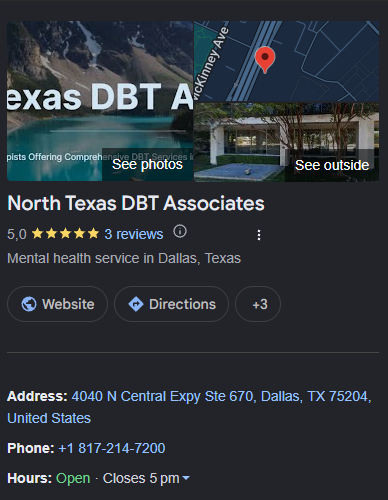
If you want this done for your practice, see local SEO and mental health and therapy marketing. For a real example, read the North Texas DBT Associates case study.