
Home / Mental Health & Therapy / North Texas DBT Associates case study
Case study · Dallas, Texas
North Texas DBT Associates: found on Google and in AI answers.
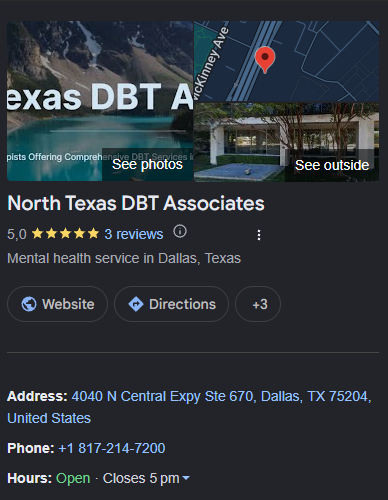
North Texas DBT Associates is a dialectical behavior therapy (DBT) practice in Dallas, Texas. It's on page one of Google for core Dallas DBT searches, at position 3.1 for "dbt dallas" and 4.6 for "dallas dbt" over the last four weeks, and in a year it moved from page six to page one for the broad search "dbt therapy". It's also found frequently through ChatGPT and other AI tools. Those two channels, Google search and AI answers, are where its new leads come from.
I'm Tom Cairns. I've looked after the practice's website and search since before 2021, and since 2022 through CairnsCom, my marketing, revenue and systems consultancy.
Last updated November 2026
The starting point
What did the practice need?
DBT is a specialist, evidence-based therapy, and the people looking for it are often searching at a hard moment. The practice needed to be found by people in Dallas searching for DBT, to explain clearly what it offers and who it's for, and to handle inquiries and intake in a way that protects client privacy. If you run a practice yourself, my guide to Psychology Today versus a Google Business Profile is a good place to start.
The work
What kind of work did it take?
- Site structure and content, so each service has a clear page that search engines and AI tools can read
- Local and technical search for the Dallas DBT terms people actually type
- Intake and HIPAA-aware systems, so inquiries are captured without putting client information at risk
- AI visibility, so ChatGPT and Google's AI answers can describe and recommend the practice accurately
If you run a practice, this is the same work I describe on my therapy and mental health marketing page and my AI search visibility page.
The results
What changed in the numbers?
Google Search Console, last 28 days (10 October to 6 November 2026) against the same 28 days in 2025, unless a row says otherwise.
| Measure | Result | Source |
|---|---|---|
| Times shown in Google search | 15,422, up 150% from 6,180 | Google Search Console |
| Visits from Google search | 231, up 34% from 172 | Google Search Console |
| Search terms ranking on page one of Google | 274, up from 113, about 2.4 times as many | Google Search Console |
| Average position in Google | 13.9, against 19.7 a year earlier (lower is closer to the top) | Google Search Console |
| The broad search "dbt therapy" | Page six (position 54) to page one (position 9.7), and from 10 to 1,617 times shown | Google Search Console |
| Visits referred by AI assistants | Appearing from June 2026 | Google Analytics |
| Appearances in Google AI Overviews and AI Mode | Grew from May to July 2026, the first months Google reported them | Google Search Console |
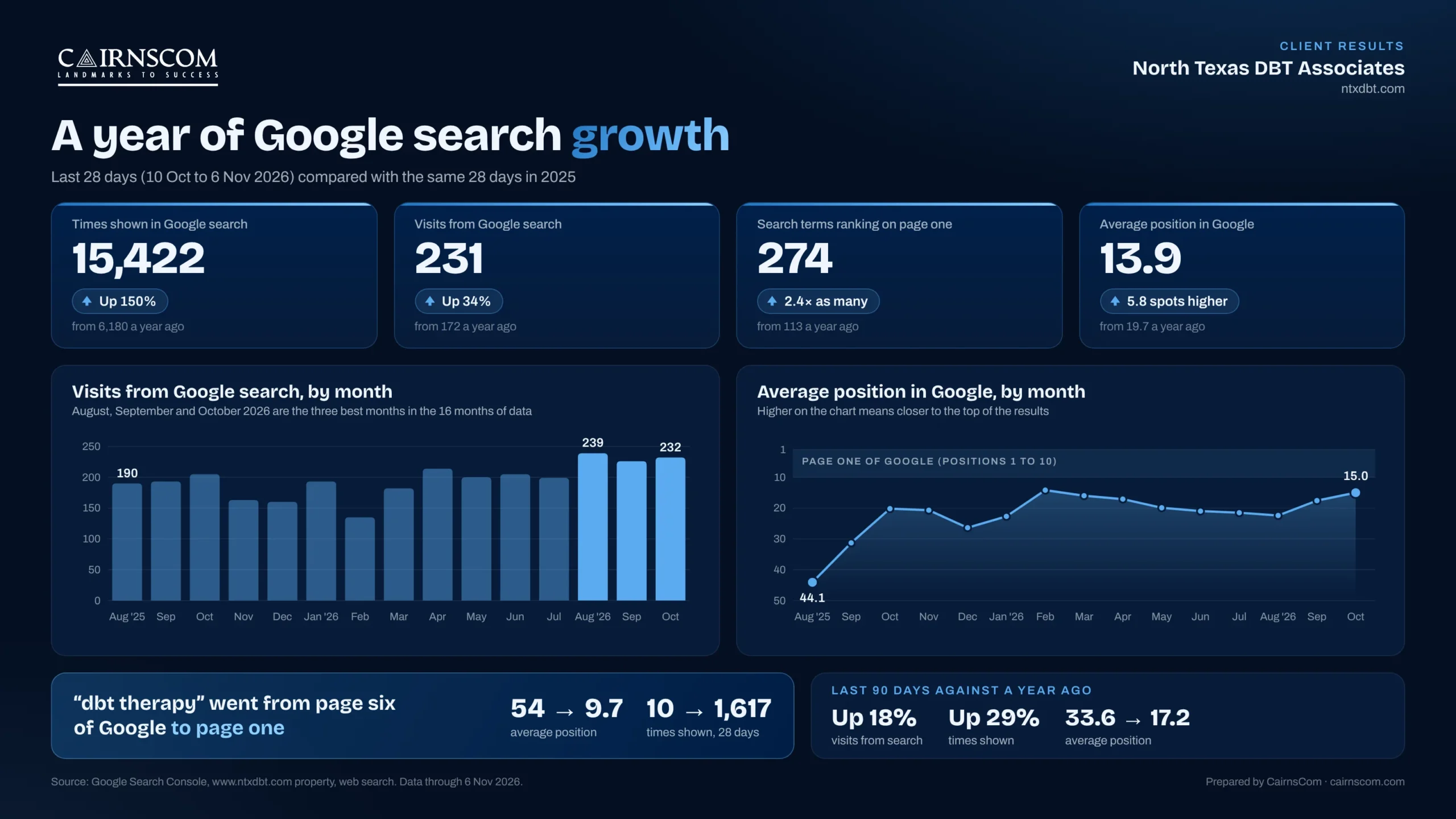
August, September and October 2026 were the practice's three best months for visits from Google search in the 16 months of Search Console data. Over the last 90 days, visits from search are up 18% on a year earlier, the number of times Google showed the site is up 29%, and its average position went from 33.6 to 17.2. The newest change is AI: people now find the practice through assistants like ChatGPT as well as Google.
These results are also in a two-minute video. Watch it on YouTube, or read the script on my marketing for therapists page.
Day to day
What does that mean for the practice?
The practice is found on ChatGPT and other AI tools frequently now, and that plus Google search is how its leads come in.
Common questions
About this case study: questions
How long did this take?
Years, not weeks. The Google positions were built over several years, most of the growth in visits came in the first year of tracking, and the AI referrals arrived in 2026. The biggest recent jump came in autumn 2026, after a round of technical and content work: the site's average position went from 22.4 in August to 15.0 in October.
What does a practice need in place first?
A website it controls, a Google Business Profile, and a clear description of who it treats and how. Intake also has to be set up so inquiries are captured without putting client information at risk.
Does this work outside Dallas?
Yes. The same work applies to any practice that serves a local area. I work with businesses across the US, the UK and Europe.
Is this only for therapy practices?
No. Any business that depends on being found locally can use the same approach, though healthcare adds privacy rules that shape how intake and tracking are set up.
Want your practice found the same way? Let's talk.
A thirty-minute call to look at where you're found today and what would change it.